
Every dog owner wants the best for their companion. When challenges arise, it is easy to look for a quick fix, such as a new collar, harness or gadget that promises to solve the problem overnight. The truth is, there is no perfect tool you can buy that will magically fix a badly behaved dog.
Because the most powerful tool you will ever have is not sold in any shop.
It is you!

As the saying goes:
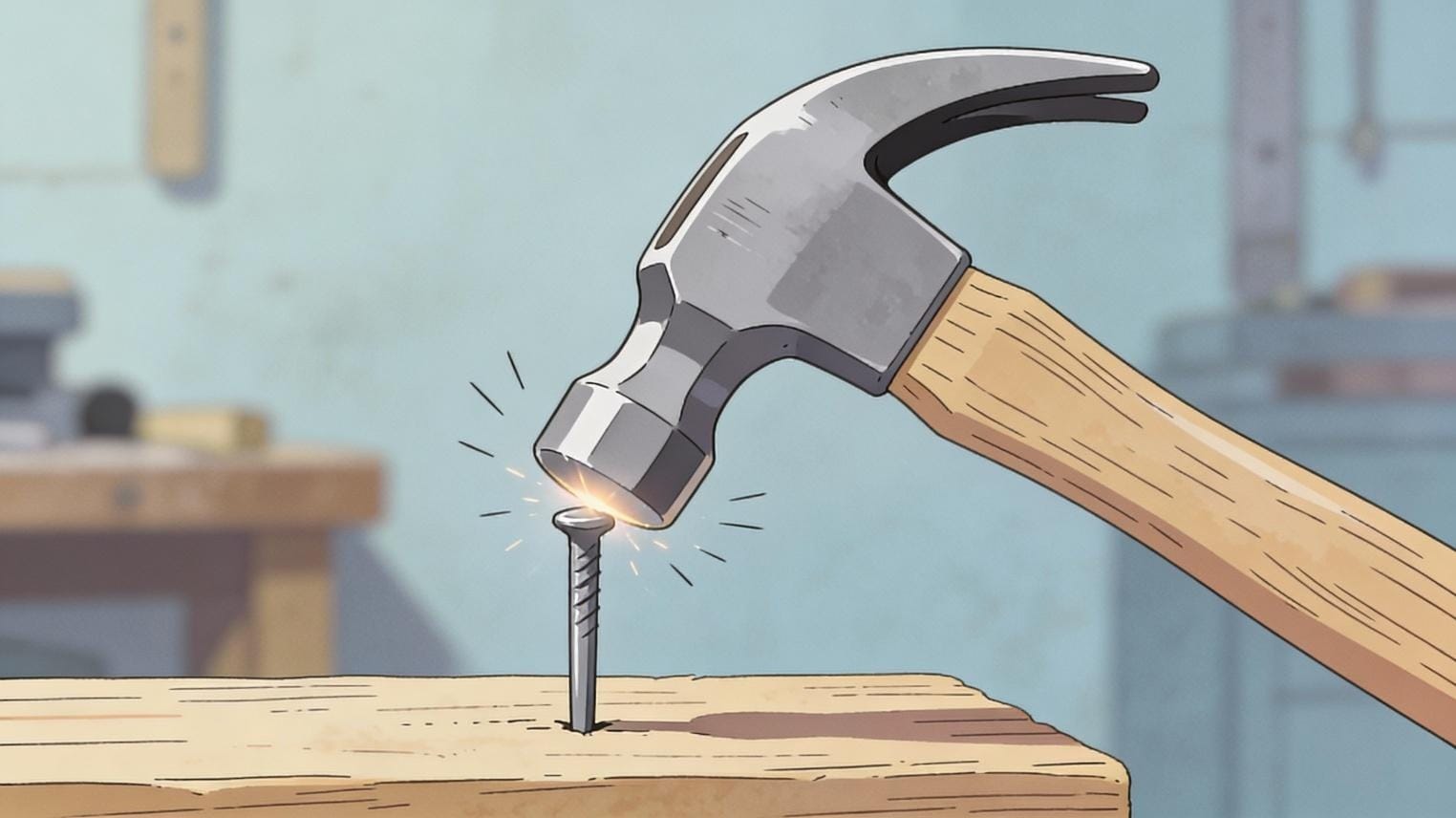
“It is not the size of the hammer; it is the nail you are throwing it at!!!”
The message is clear.
- Success does not come from the tool itself but from how you use it!
Dogs Do Not Misbehave on Purpose
Dogs are not capable of deliberate misbehaviour. They do not act out of spite or malice. When a dog jumps up, pulls on the lead, growls or ignores commands, it is not being naughty. It is communicating. Often, the behaviour is a sign of stress, confusion or inconsistency in the training.
In most cases, the issue does not lie with the dog at all. It lies in how the human and dog communicate with one another and that is something no piece of equipment can fix.
The Real Issue Is Not the Tool, It Is the Handler
With the UK Government moving to ban tools such as prong collars and e-collars, it is important to look beyond the equipment and consider how it is being used. The truth is that the tool itself is neutral. The problem arises in how and why it is applied.
If a dog owner struggles to communicate effectively without these tools, relying on them will not fix the underlying issue. In many cases, it can make things worse by masking the real problem rather than addressing it.
A good communicator does not need such devices to train or guide a dog. They depend on calmness, timing, consistency and empathy instead of force or shortcuts.
Invest in Yourself Before You Invest in Tools
Think about raising children. If a child’s behaviour becomes challenging, you would not rush out to buy a gadget that claims to fix them. You would take time to reflect, look at your approach and find better ways to communicate.
The same principle applies to your dog.
The first and most valuable investment you can make is in yourself.
That means:
- Learning to understand canine body language and motivation.
- Discovering how dogs process information and respond to cues?
- Developing patience, confidence and consistency in every interaction.
When you build these skills, you become the calm and reliable presence your dog needs. Suddenly, quick fixes lose their attraction because you are achieving results through trust and understanding rather than through gadgets or gimmicks.
Final Thoughts
No tool can replace a strong relationship, clear communication and mutual respect. Before you buy another training aid, ask yourself two simple questions.
- What is my dog trying to tell me through this behaviour?
- How can I improve the way I communicate and support them?
When you invest in your own ability first, you stop searching for instant solutions and start building the kind of connection that makes your dog want to listen.
Because the best training tool is not the one you hold in your hand.
It is the one you become.
Further Reading:
UK law and policy on collars
- Defra – “Biggest animal welfare reforms in a generation”
https://www.gov.uk/government/news/defra-announces-biggest-animal-welfare-reforms-in-a-generation - British Veterinary Association – “Electric shock collars and training aids”
https://www.bva.co.uk/take-action/our-policies/electric-shock-collars-and-training-aids/ - Vet Times – “Shock collar ban consultation welcomed”
https://www.vettimes.com/news/vet-nursing/small-animal/shock-collar-ban-consultation-welcomed - Take the Lead Training – “Are Electric Collars Banned in England?”
https://taketheleadtraining.co.uk/are-electric-collars-banned-in-england/
Positive reinforcement and training approach
- ManyPets – “Using positive reinforcement to train your dog”
https://manypets.com/uk/articles/positive-reinforcement-train-dog/ - Pup Club Official – “The Power of Positive Reinforcement in Dog Training”
https://pupclubofficial.com/positive-reinforcement-dog-training/ - Gingr – “Dog Training Techniques for 2024”
https://www.gingrapp.com/blog/dog-training-techniques-for-2024 - K9 Principles – “Overcoming Dog Training Challenges: A Guide to Effective Positive Reinforcement Techniques”
https://k9principles.ca/2024/02/22/overcoming-dog-training-challenges-a-guide-to-effective-positive-reinforcement-techniques/
Canine communication and body language
- Positively – “Canine Body Language”
https://positively.com/dog-training/article/communication-canine-body-language - Bark – “How To Read Your Dog’s Body Language”
https://bark.co/blogs/bark-post/dog-body-language-guide - Texas A&M Today – “Understanding Your Dog’s Body Language: A Guide To Canine Communication”
https://stories.tamu.edu/news/2025/03/13/understanding-your-dogs-body-language-a-guide-to-canine-communication/