
Every dog owner knows the feeling. You set off for what should be a relaxing stroll, and before you know it, your arm’s being dragged down the pavement. For owners of big, enthusiastic dogs like German Shepherds, it can feel more like a resistance workout than a walk. The good news is that lead manners don’t rely on strength or shouting. They come from good timing, clear communication, and making the experience more rewarding for the dog than charging ahead.
That’s where a bungee lead and a little technique called the fingers twitch come in.
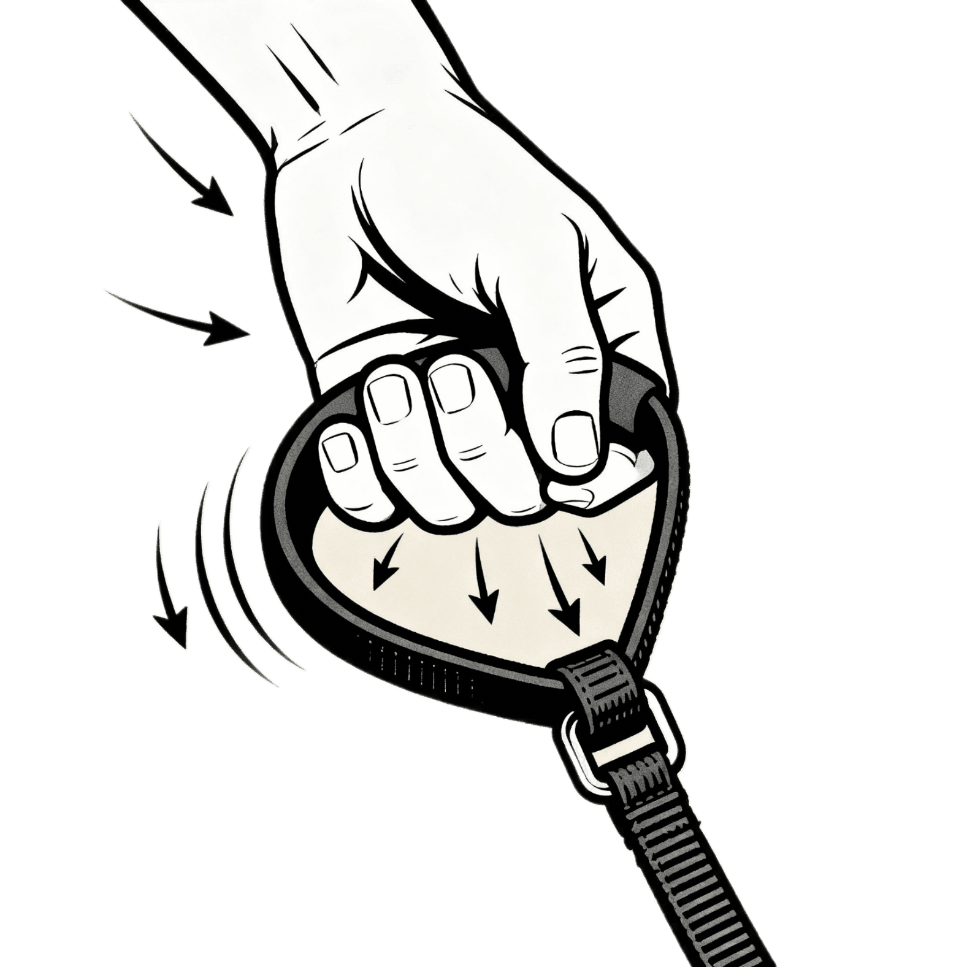
Figure 1: Fingers Twitch
The rapid open and closing of the fingers send a gentle communication down the lead to the dog.
What Makes a Bungee Lead So Useful
A bungee leadis often misunderstood and misused. Many of these products are advertised as being a shock absorber, to help reduce the stress from pulling dogs. These leads have a bit of stretch built in. That slight give absorbs the shock when your dog moves forward, so instead of a sudden jolt, there’s soft feedback. It keeps the connection smoother and helps prevent that tug-of-war feeling.
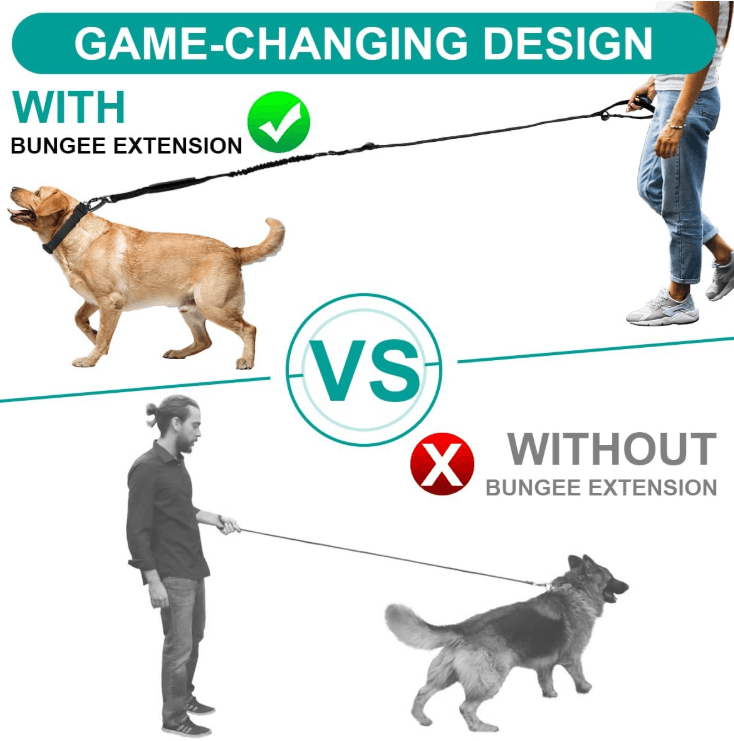
Figure 2: Bungee Lead Advertisement
However what if that built in bit of stretch can be used to gently communicate with your dog?
It’s a more forgiving line of communication. Your dog can still feel a change in pressure but without it becoming harsh or scary. It also teaches them that a steady, relaxed lead is the most comfortable way to walk together.
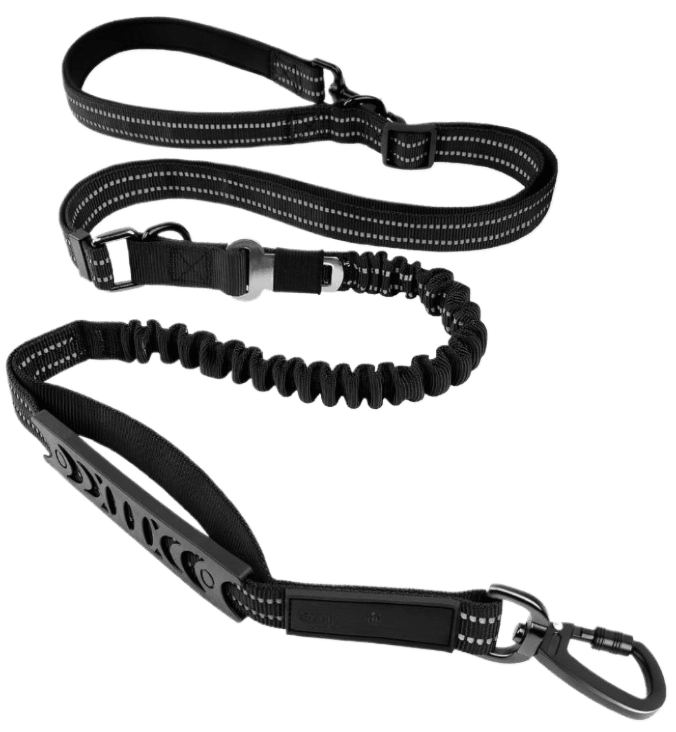
Figure 3: Bungee Dog Lead
How the Fingers Twitch Works
The fingers twitch is about feel, not force. When your dog begins to move ahead and the lead starts to tighten, use a subtle, quick movement of your fingerss. It’s simply a light cue that says, “Come back to me.” The second they respond by easing the tension or looking in your direction, relax the lead immediately. Follow up with calm praise, a treat, or a quick play moment beside you.
What’s happening here is simple communication through touch and timing. You’re teaching your dog to pay attention to the small signals in your hand rather than waiting until the lead goes tight.
Encouraging the Return to the “Fun Zone”
This is where the real joy begins. The area close to your side, where your dog earns treats, praise, play, or even access to the next sniff, can be thought of as the fun zone. That’s where all the good stuff happens.
Each time your dog moves into that space, they’re reminded that walking close brings comfort and rewards. The combination of the gentle bungee resistance and your fingers twitch quietly guides them back to that fun zone again and again. Over time, your dog starts to choose that position willingly, because being near you is simply more enjoyable than dragging ahead.
Trainers often call this building value for proximity. In other words, your dog learns that you are the most rewarding part of the environment, not the hedge or lamppost ten feet away. With enough consistency, the habit of returning to the fun zone becomes second nature.
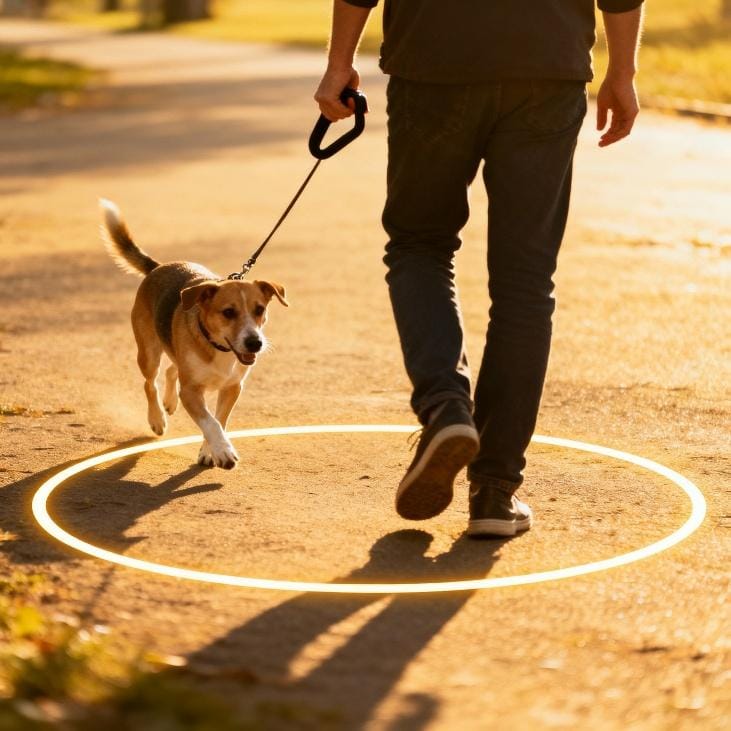
Figure 4: Dog’s Fun Zone
Maximising the Attraction of the “Fun Zone”
Inside the Fun Zone (the area close to the handler), the activities are designed to reward and reinforce the dog’s choice to stay near their owner. These activities build value for proximity and make loose lead walking enjoyable and motivating for your dog.
Reward-Based Activities
- Offer your dog tasty treats delivered right next to your side, especially for checking in or walking calmly within the circular “fun zone” area.
- Use a favourite toy for a short tug or fetch game, keeping play interactive and within arm’s reach.
- Provide extended physical affection such as gentle petting, shoulder rubs, or verbal praise when your dog remains in zone.
- Give sniff or explore breaks as a bonus, letting your dog investigate the environment for a few seconds, then returning to engage you for the next reward.
Training and Engagement Games
- Practice basic cues such as “sit,” “down,” or “touch” when your dog returns to the zone, rewarding promptly.
- Ask for short attention games such as eye contact or a hand target, marking the behaviour each time your dog offers focus.
- Incorporate movement, including walking backwards so your dog follows you inside the circle, or random turns to keep your dog attentive and willing to stay near.
Reinforcing Calm and Connection
- Use periods of calm connection where you and your dog simply relax together in the fun zone, reinforcing that close proximity is safe and rewarding.
- Mix activities so your dog doesn’t know which good thing will happen next—sometimes it’s food, sometimes it’s play, sometimes it’s a chance to explore.
Treat the Fun Zone as a positive, surprise-filled space. When your dog learns that being inside the “zone” brings great things, they naturally want to return and stay close during walks. This approach supports loose lead habits and a joyful walking partnership.
Why This Combination Works
The beauty of using a bungee lead and fingers twitch together is that they replace tension with communication. The bungee smooths out resistance and prevents accidental jerks, while your quiet cue adds clarity. The result is a walk that feels cooperative instead of competitive.
As your dog realises that staying near you keeps things calm, fun, and full of rewards, pulling becomes unnecessary. It’s no longer about control, but about shared rhythm and trust.
Alignment With the ABC
The finger twitch technique with a bungee dog lead fits neatly into the ABC (Antecedent–Behaviour–Consequence) model used in behaviour-based dog training. This model helps explain how small, well-timed cues and feedback shape a dog’s understanding of what earns reward and what doesn’t.
Antecedent (A)
The antecedent sets the stage for the behaviour by creating the conditions that guide the dog’s next choice.
- The presence of the bungee lead introduces light, elastic feedback instead of rigid pressure. The dog feels gentle
- resistance when they move too far ahead, helping them sense the boundary naturally.
- The handler’s relaxed posture and ready grip on the lead loop signal calm control.
- The finger twitch (a tiny curling or tightening motion with four fingers on the lead handle) acts as the tactile cue that precedes the desired behaviour.
This light twitch is a prompt: it says “check in” or “come closer”,without needing words or physical correction.
Behaviour (B)
The behaviour is what the dog does in response to that tactile signal.
- The dog feels the subtle change in the lead (from the finger twitch) and, through experience, learns that the correct response is to soften, slow down, or move back toward the handler instead of pulling or surging forward.
- As soon as the dog makes this adjustment, the handler releases the tension, creating a clear link between the dog’s action and the removal of pressure.
Over time, the dog anticipates this and maintains a slack lead, staying naturally within the handler’s “fun zone”.
Consequence (C)
The consequence strengthens the connection between behaviour and result.
- As soon as the dog re-enters the fun zone or softens the lead, the handler provides positive reinforcement: verbal praise, a treat, gentle petting, or access to something desired (for instance, being allowed to move forward or sniff).
- The release of tension itself is also a small form of negative reinforcement (the mild pressure ends when the dog makes the right choice).
The consistent pairing of release + reward teaches the dog that responding to the finger twitch cue keeps walks comfortable and gets them what they want.
Table 1: ABC Components
| ABC Element | Example in Finger Twitch Context |
| Antecedent | Dog starts to pull; handler uses a light finger twitch through the bungee lead. |
| Behaviour | Dog slows down, relaxes, or returns closer to handler. |
| Consequence | Lead tension disappears; handler gives praise, treats, or forward movement. |
Why It Works
This approach fits the ABC structure because it’s timely, minimal, and reward-based. The antecedent (tactile twitch) clearly predicts what earns relief and reward. The dog’s behaviour (loosening or returning) leads to positive consequences (comfort and praise). The bungee lead keeps communication gentle and prevents escalation, turning the lead into a channel of feedback rather than restraint.
A Few Helpful Tips
- Keep your grip soft so you can feel the dog’s movement through the lead.
- Practise first in quiet areas to build consistency before adding distractions.
- Pair your lead technique with positive reinforcement. Speak softly, reward generously, and build engagement.
- Make the fun zone exciting by mixing up your rewards: use food, toys, and verbal praise so your dog never knows which good thing will happen next.
Final Thoughts
Loose lead walking isn’t about forcing control. It’s about:
- Connection.
- Conversation.
- Consistency.
When the dog learns that hanging out in the fun zone brings comfort and joy, and when your lead technique communicates clearly without tension, you both start to enjoy the walk again.
Over time, the pulling fades, the tension disappears, and those daily walks become what they were meant to be: calm, connected, and genuinely enjoyable. Then you can come home, put the kettle on, and feel properly proud of how far you’ve both come.
References
- https://absolute-dogs.com/blogs/gamechangers/3-steps-to-achieving-loose-lead-walking
- https://thecaninehub.co.uk/2025/03/02/loose-lead-walking-how-to-stop-pulling-and-enjoy-stress-free-walks/
- https://www.youtube.com/playlist?list=PLphRRSxcMHy1mGMfdVKXq_hiJ27Ej1shW
- https://www.developyourdog.co.uk/puppy-lead-training-stop-pulling-with-the-drunk-walking-game/
- https://www.tailsbydawn.co.uk/hints-and-tips/loose-lead-walking
- https://aniedireland.com/2019/03/12/day-65-loose-leash-walking-doesnt-have-to-be-boring/
- https://www.whole-dog-journal.com/training/how-to-teach-loose-leash-walking-to-your-dog/
- https://www.youtube.com/watch?v=dE3tZbzNgPo
- https://www.dogstrust.org.uk/dog-advice/training/outdoors/walking-nicely-training