
Introduction
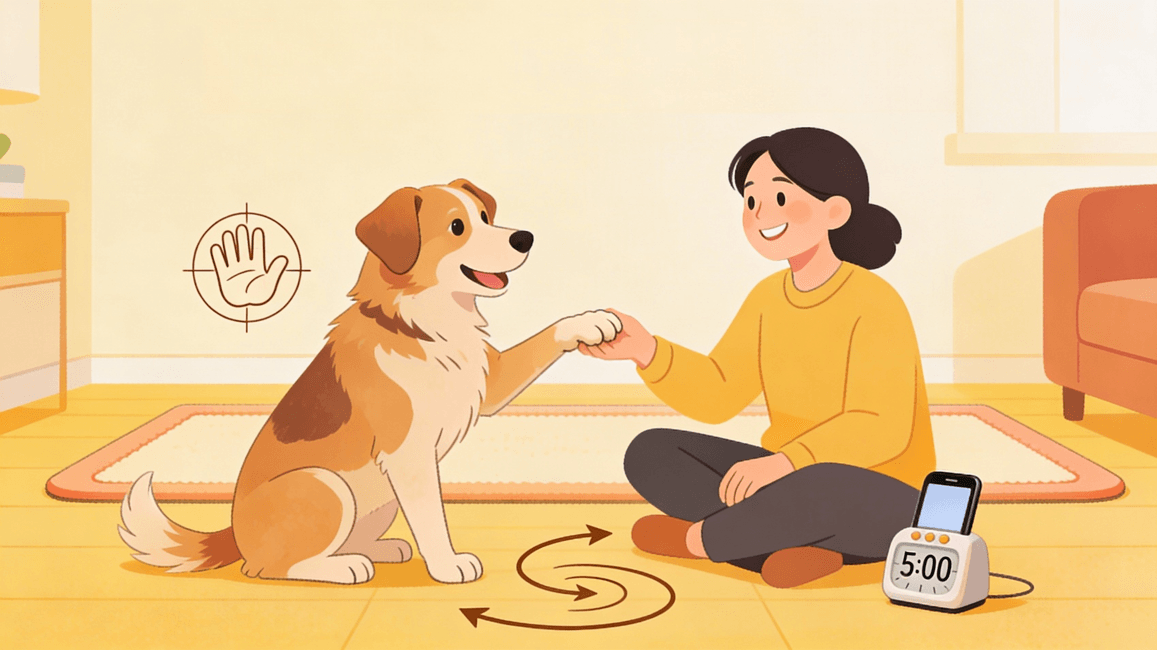
Five minutes a day might not sound like much, but for your dog it can be the difference between “quite obedient” and “absolute superstar”. Training in tiny daily chunks keeps things fun, avoids overwhelming your dog and fits neatly into real life where time and energy are often in short supply. This monthly five minute per day trick challenge is designed to be light, playful and genuinely achievable for busy humans.
Why five minutes works?
Dogs learn best in short, focused bursts rather than long, tiring sessions. A brief session keeps your dog’s attention, helps to prevent frustration and leaves them wanting more instead of switching off. Even shy or easily distracted dogs can cope with a tiny window of concentration, which is perfect if you are working around work, children or other dogs in the home.
When you repeat those five minutes almost every day the progress really adds up. The repetitions build muscle memory, your timing improves and your dog starts to anticipate that training is a fun little part of the daily routine. Over a month you will have created dozens of positive, successful moments together without ever needing to set aside a big block of time.
The idea behind the monthly challenge
The goal of this challenge is to teach or polish a handful of easy, feel-good tricks using nothing more than five minutes a day. Everything is broken down into small steps so that both you and your dog can succeed quickly. The focus is on tricks that are:
- Simple for most dogs to pick up.
- Low impact on joints and suitable for a wide range of ages.
- Useful for confidence, connection or handling, as well as being a bit of fun.
Rather than bouncing between lots of different behaviours in one session, the plan concentrates on one trick per day. That clear focus helps your dog understand what earns rewards today and makes it easier for you to see progress from week to week.
The weekly trick rotation
You can start this challenge at any time. Think of it as a four-week cycle where each day has a theme. Over the month you repeat the same pattern, gradually making each trick a little smoother or slightly more advanced.
A simple weekly rota might look like this:
- Monday – Hand touch (nose to palm).
- Tuesday – Paw or shake.
- Wednesday – Spin in a circle.
- Thursday – Bow.
- Friday – Middle (standing between your legs).
- Saturday – Wave.
- Sunday – Free choice or catch-up day.
Hand touch is a brilliant foundation trick that you can turn into recall games, positions and targeting objects. Paw and wave are crowd pleasing and useful for grooming and vet handling. Spin and bow encourage body awareness and flexibility while middle is especially nice for nervous dogs who feel safer close to you. Sunday is your chance to revisit anything that felt sticky or to let your dog “choose” their favourite trick.
The five-minute daily structure
The secret to making a tiny session work is structure. Instead of drifting, you follow the same rhythm each day, so your dog recognises the pattern and relaxes into it. Five minutes can look like this:
- Around 1 minute of warm up.
- Around 3 minutes on the trick of the day.
- Around 1 minute of easy fun to finish.
For the warmup, pick something your dog already finds very easy such as sit, a simple hand touch or a short “find it” game where you scatter a few treats. This gets the brain engaged and gives your dog a couple of instant wins.
The middle three minutes are where you work on the chosen trick. Aim for short bursts of 3 to 5 repetitions followed by a tiny break, rather than firing off cue after cue. If you are using food, keep the treats small and reset your dog between each repetition. The final minute is your cool down where you either play gently or run through one or two tricks your dog already knows very well, then end the session while enthusiasm is still high.
Teaching the easy tricks
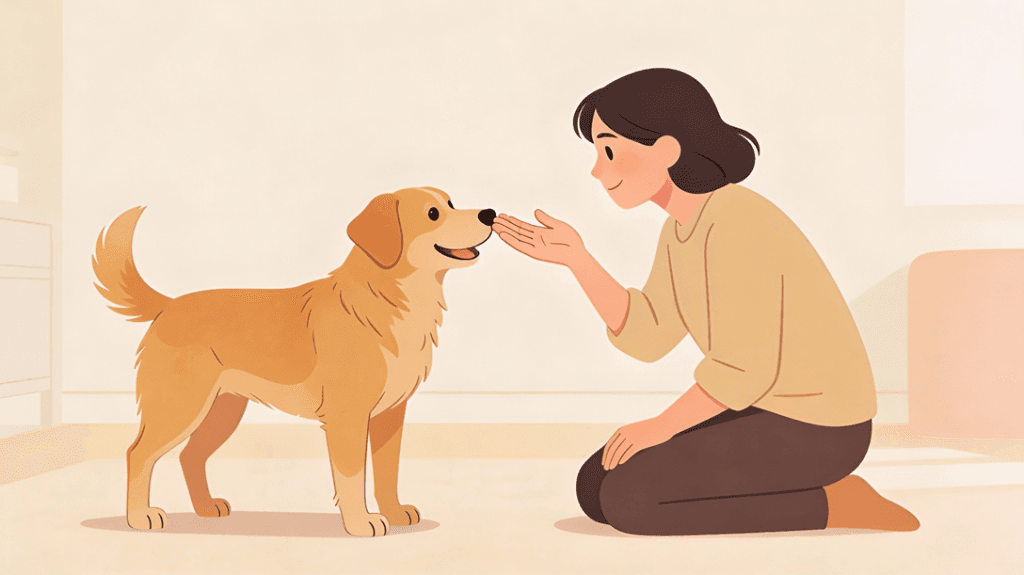
Each trick in the rota can be taught in very small, clear steps. You can treat these as starting points and adjust the pace for your dog.Hand touch: Present your open hand a couple of centimetres from your dog’s nose. The moment they sniff or bump your palm, say your marker word and reward. When that is automatic, add the word “touch” a second before you show your hand and gradually move your hand to different positions.
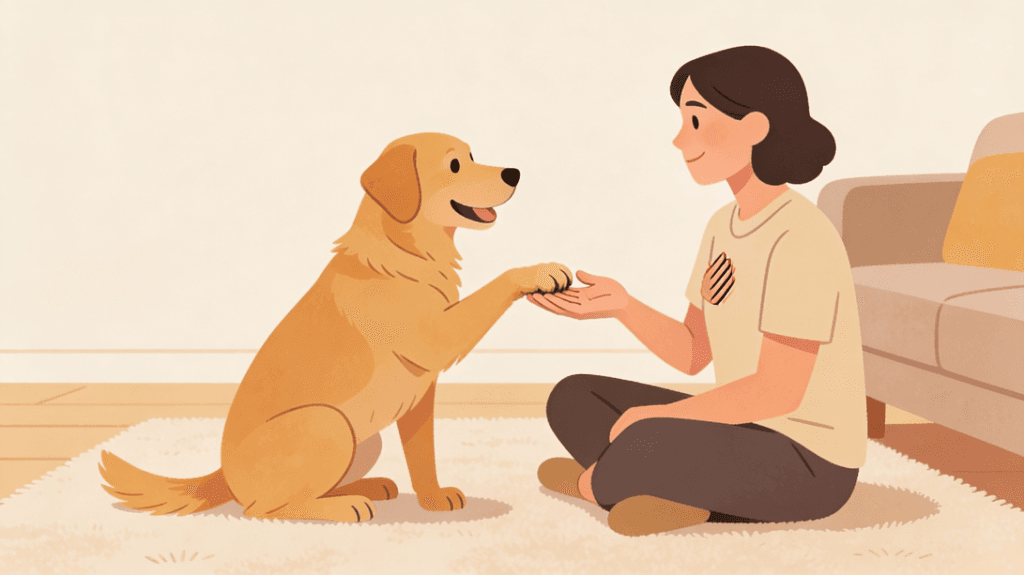
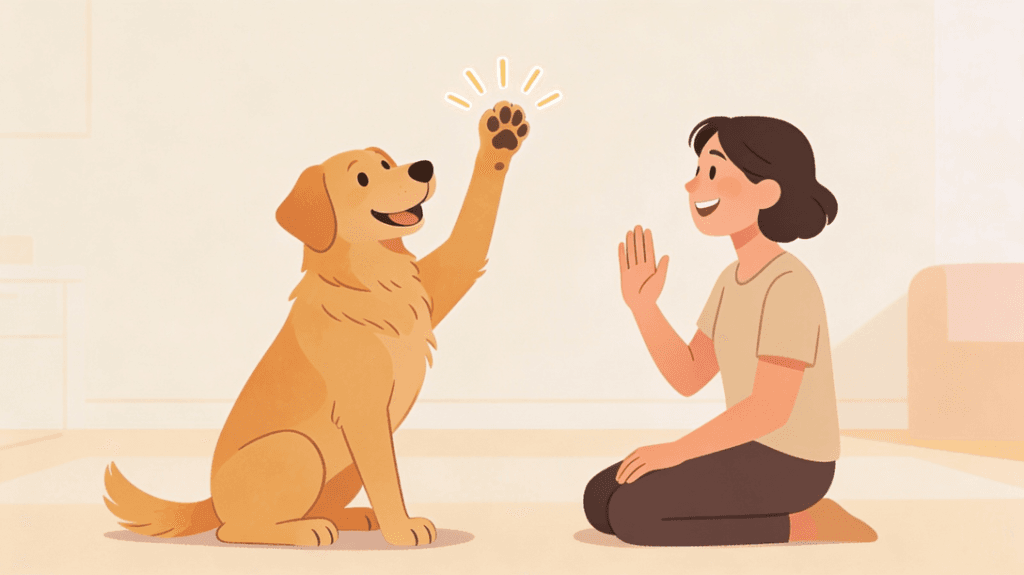
Paw: With your dog in a sit, hold a closed fist with a treat inside just below their chest. Many dogs will paw at your hand. Mark the first paw movement and open your hand to let them have the treat. Once they are consistently lifting a paw, swap to an open hand and add “paw” or “shake” before you present it.
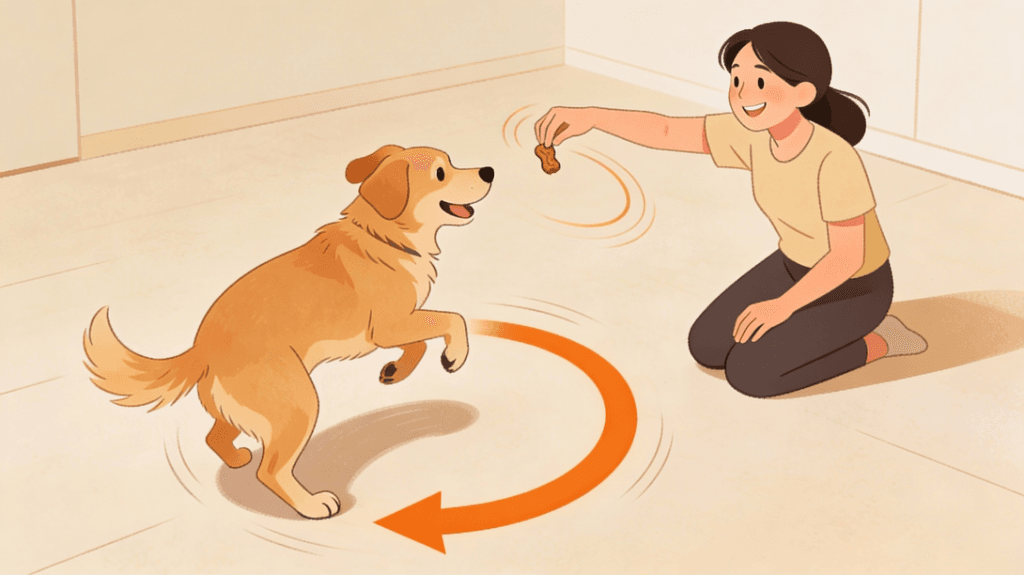
Spin: Hold a treat at your dog’s nose and slowly draw a small circle so their head follows and their body turns. As they complete the circle, mark and reward. When this is easy, introduce the word “spin” just before you start the movement and over time make the hand signal smaller.
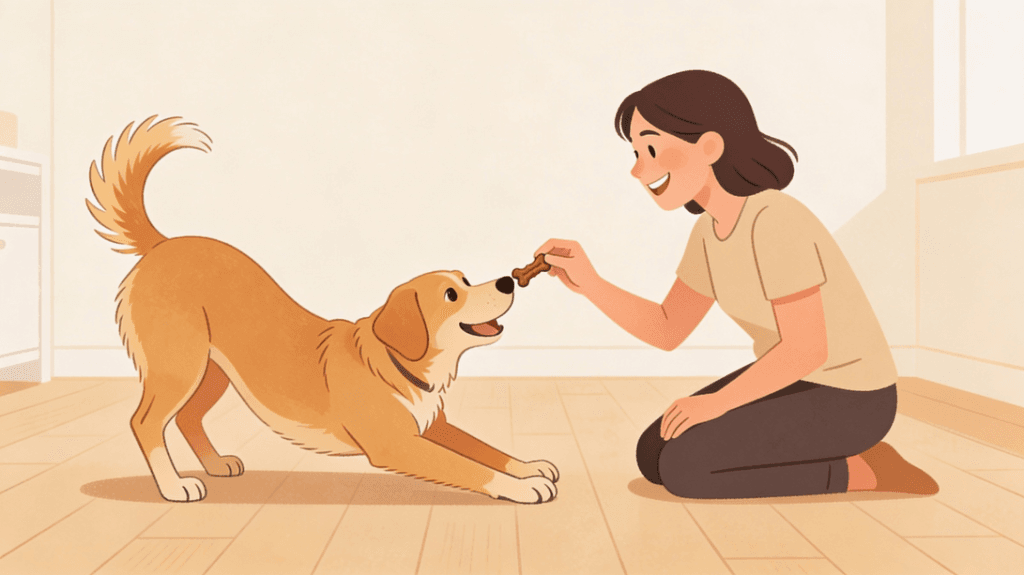
Bow: From standing, lure your dog’s nose straight down between their front paws but do not move the treat backwards. You are looking for their front end to lower while the back stays up. Reward any attempt at this shape. Gradually wait for a deeper bow before you pay and then add the cue “bow” as they start to fold at the shoulders.
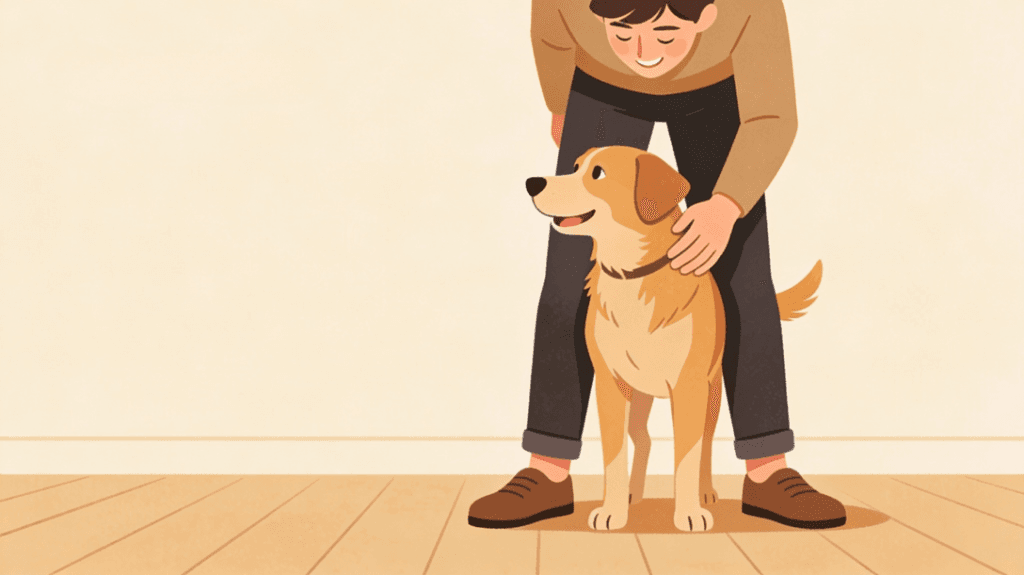
Middle/Centre: Stand with your legs apart and lure your dog from in front of you to step between your legs and stop there. Mark and reward when they are standing in the middle. Repeat until they happily step into the position, then add the word “middle” as they begin the movement. This can become a go to safe place for worried dogs.
Wave: Start from the paw behaviour. Instead of offering your hand for them to place their paw on, hold your hand slightly out of reach. When they lift the paw into the air, mark and reward straight away. Add the cue “wave” and a small human wave as you pay for higher or longer paw lifts.
For each trick, keep the criteria very easy at first. If your dog looks confused or keeps making mistakes, you have probably gone too fast. Drop back to the last level where they were successful, reward that generously and only then try nudging the difficulty again.
Keeping it fun for a full month
Motivation is everything in a challenge like this. The aim is not perfection, it is building a habit and creating a month full of positive interactions. A few simple habits will help:
- Train at roughly the same time each day so it becomes part of the routine.
- Use rewards your dog truly enjoys, whether that is food, toys or permission to run back to a favourite spot afterwards.
- End every session on something your dog can do easily, even if the new trick felt a bit tricky that day.
As the weeks go by you can gently increase the difficulty by changing only one thing at a time. You might practise the same trick in a different room, ask for the behaviour while you are sitting instead of standing or start to reward every second correct repetition rather than every single one. The trick should still feel easy, just a little more polished.
By the end of the month your dog will not only know several new tricks but will also have learnt that training with you is short, predictable and enjoyable. That is the real power of the five minute per day challenge. It builds skills, strengthens your relationship and fits into everyday life without demanding huge amounts of time or energy.